

Accurate documentation of heart sounds is one of the most critical and most overlooked skills in clinical practice. Whether you're a nursing student charting your first auscultation or a seasoned cardiologist tracking a patient's murmur progression, knowing how to record what you hear can be just as important as knowing what you're listening for. With the rise of digital stethoscopes, that process has become faster, more precise, and sharable in ways that weren't possible a decade ago.
Why Documenting Heart Sounds Matters
Heart sounds tell a story. S1 and S2 mark the opening and closing of valves. An S3 can signal heart failure. A systolic murmur can point toward stenosis or regurgitation. But unless those findings are captured clearly, they're lost between shifts, misinterpreted by colleagues, or invisible in the patient record.
Strong documentation creates a clinical baseline, supports diagnostic continuity, and protects both the patient and the provider.
The Manual Method: What to Include in Your Notes
When documenting heart sounds without a digital tool, your written notes should always capture:
- Rate and rhythm: regular, irregular, or irregularly irregular
- Heart sounds present: S1, S2, any extra sounds (S3, S4, clicks, rubs)
- Murmur characteristics: timing (systolic/diastolic), grade (I–VI), location, radiation, and quality (harsh, blowing, rumbling)
- Point of maximum impulse (PMI): where the sound is loudest
- Positioning: sounds heard in supine vs. left lateral decubitus position
Use standardized language. "Grade II/VI systolic murmur, heard best at the right upper sternal border, non-radiating" is far more useful than "mild murmur noted."
How Digital Stethoscopes Document Heart Sounds for You
This is where modern technology changes everything. Digital stethoscopes like the Littmann CORE Digital and the Eko CORE 500 don't just amplify sound; they capture it.
Littmann CORE Digital Stethoscope
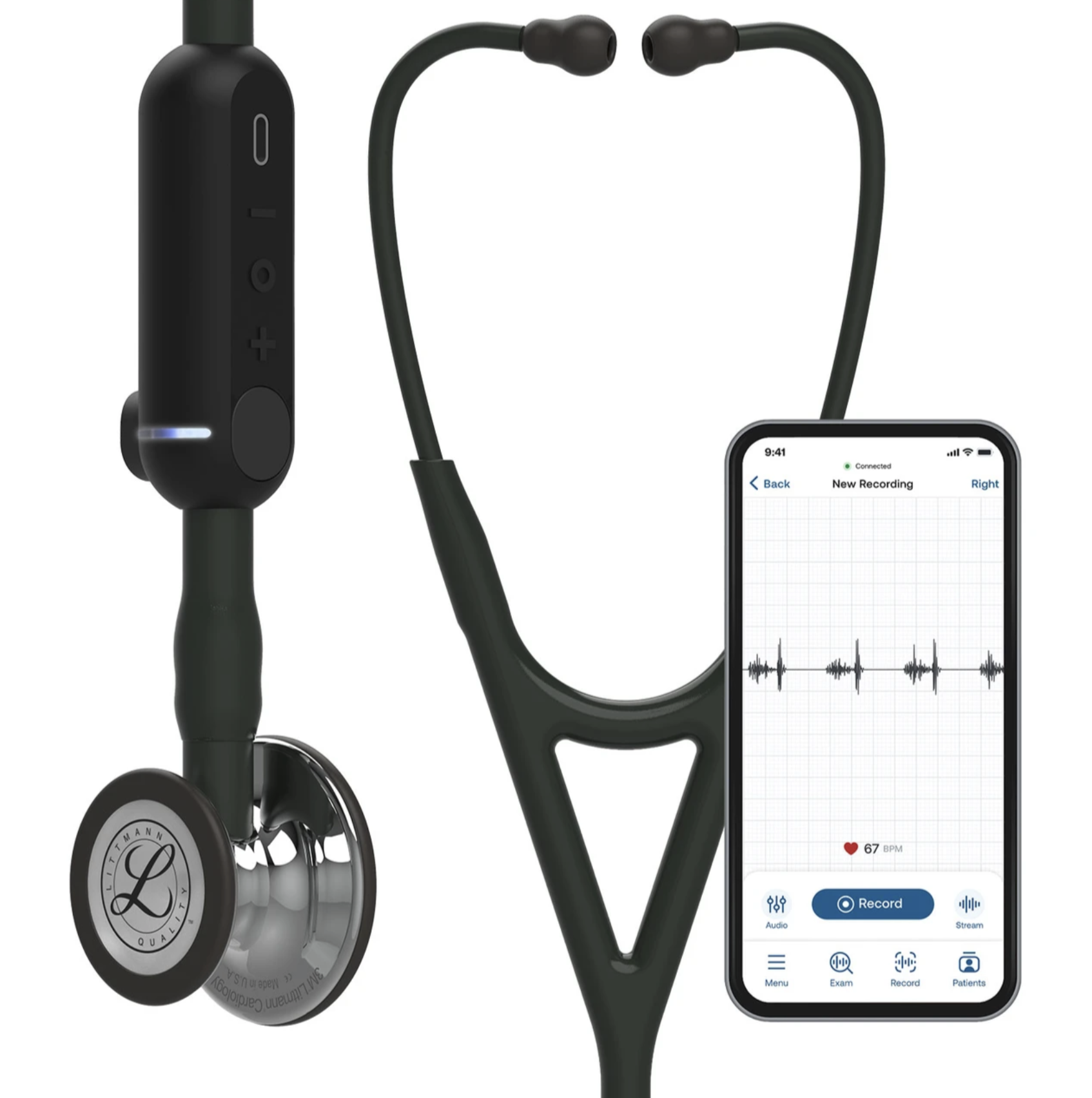
The Littmann CORE Digital connects via Bluetooth to the Eko app, where it automatically records auscultation audio in real time. Clinicians can store recordings, annotate findings, and share files directly with colleagues or integrate them into patient records. The built-in ambient noise reduction means what's stored is clean, clinical-grade audio, not a muffled room recording.
Eko CORE 500 Digital Stethoscope
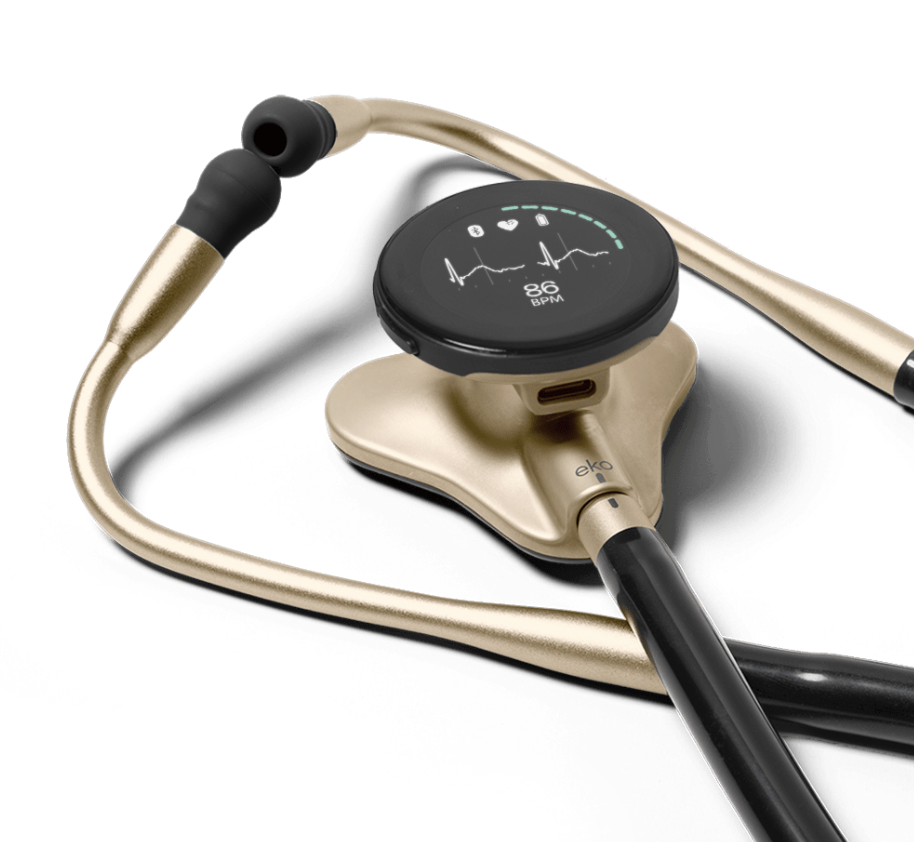
The Eko CORE 500 takes documentation a step further with AI-powered analysis. As you listen, the device captures a phonocardiogram, a visual waveform of the heart sounds, displayed directly in the Eko app. The AI can flag potential murmurs and irregular rhythms, and every session is timestamped and stored for longitudinal tracking. For telemedicine and remote consultations, recorded audio can be shared instantly without the patient leaving home.
Best Practices for Digital Documentation
Whether you're using a Littmann CORE Digital or another connected device, apply these habits:
- Label each recording with position, auscultation site, and patient posture
- Record multiple positions: murmurs can disappear or intensify with position changes
- Sync immediately after each encounter to avoid data loss
- Pair audio with written notes so context is never separated from the recording
Bringing Clarity to Every Heart Sound
Documenting heart sounds accurately is a skill built on a structured technique, but today's clinicians don't have to rely on memory and handwriting alone. Digital stethoscopes like the Littmann CORE Digital and Eko CORE 500 capture, visualize, and store cardiac audio automatically, making documentation faster and more reliable than ever. Whether you practice at the bedside or via telehealth, upgrading your documentation workflow starts with upgrading your tools.