
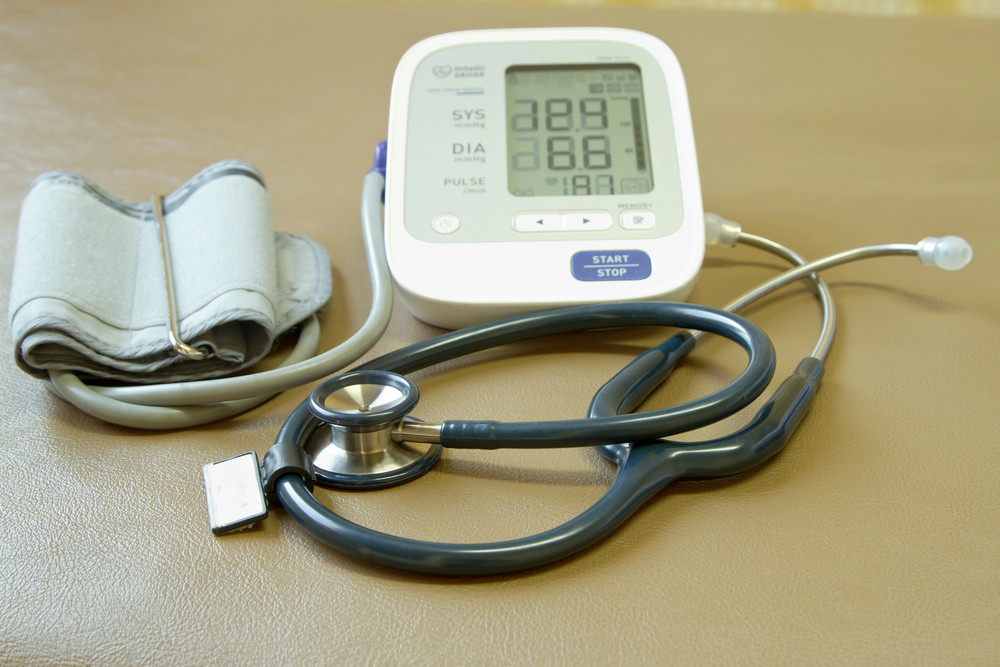
Checking blood pressure manually is a fundamental clinical skill for nurses, medical students, emergency responders, and other healthcare professionals. The process is known as the auscultatory method because it involves listening to blood flow through an artery.
A stethoscope cannot measure blood pressure by itself. It must be used alongside a sphygmomanometer, which includes an inflatable cuff, pressure gauge, bulb, and valve. Consider manual cuffs and other blood pressure monitors to assemble the appropriate equipment for clinical practice.
What You Need to Take a Manual Blood Pressure
Before beginning, gather a properly functioning stethoscope and a sphygmomanometer with a cuff that fits the patient’s upper arm. A cuff that is too small may produce an artificially high result, while one that is too large may produce an inaccurately low reading.
The patient should sit quietly for several minutes with their back supported, feet flat on the floor, and legs uncrossed. Position the bare arm on a stable surface so the cuff is approximately level with the heart. Proper positioning helps prevent measurement errors.
Where to Place Stethoscope for Blood Pressure
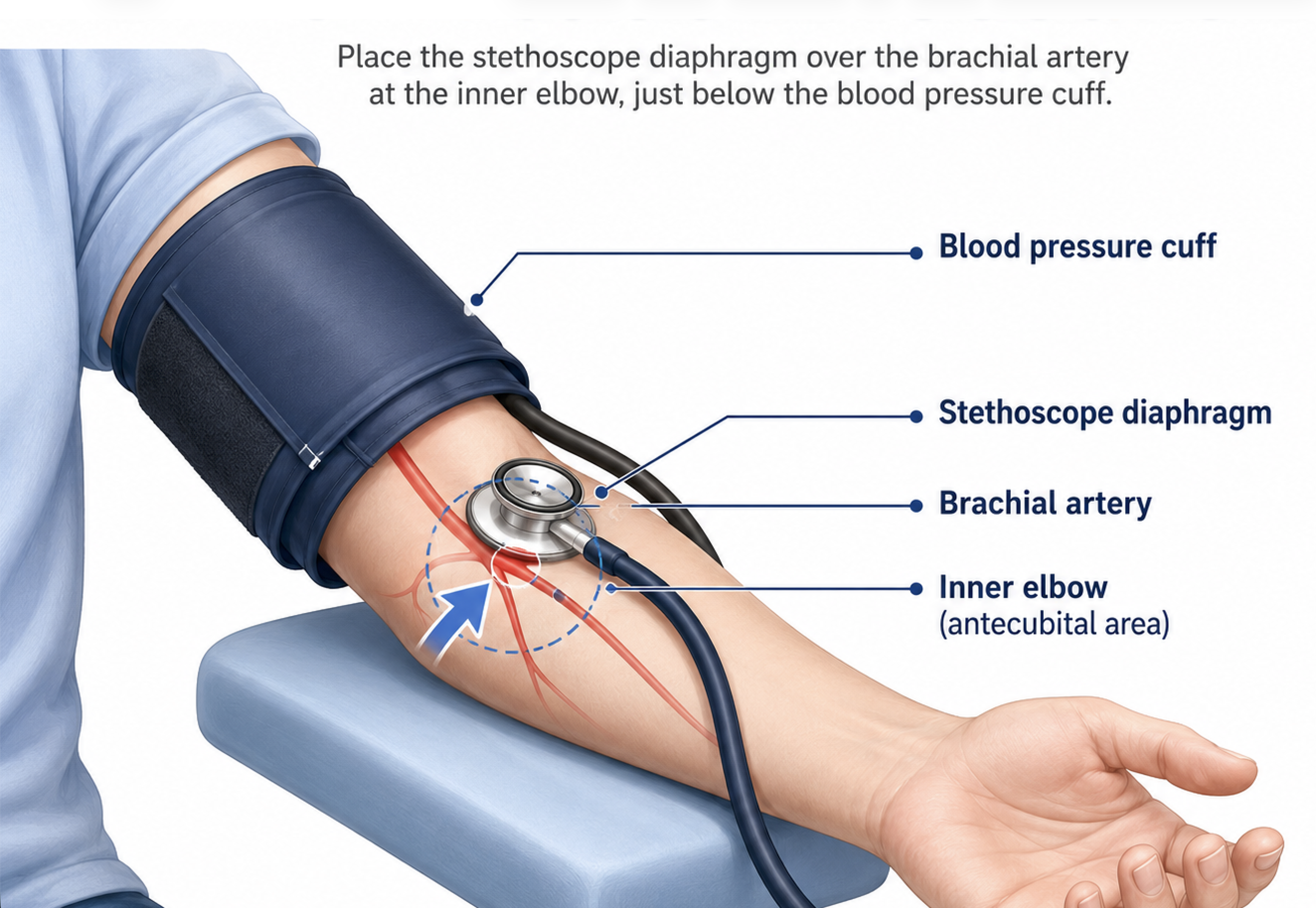
Place the cuff snugly around the patient’s upper arm, leaving enough room at the bottom to access the inside of the elbow. Locate the brachial artery by feeling for a pulse in the antecubital area, the crease on the inner side of the elbow.
Position the diaphragm or bell of the stethoscope directly over the brachial artery, just below the cuff’s lower edge. Hold it firmly against the skin without applying excessive pressure. Avoid placing the chestpiece beneath the cuff, as this may interfere with inflation and sound transmission.
How to Check Blood Pressure Manually
Close the sphygmomanometer valve and inflate the cuff until the artery is temporarily compressed. A common clinical method is to first estimate systolic pressure by palpation and then inflate approximately 20 to 30 mm Hg above that point.
Slowly open the valve so pressure falls at a controlled rate of about 2 to 3 mm Hg per second. Listen carefully for Korotkoff sounds, the tapping sounds created as blood begins flowing through the compressed brachial artery.
The gauge reading when the first clear tapping sound appears represents the systolic pressure, or top number. Continue deflating the cuff. The reading at which the sounds disappear represents the diastolic pressure, or bottom number. Record the result in millimeters of mercury, such as 120/80 mm Hg.
Tips for Getting an Accurate Reading
Measure over bare skin rather than clothing, keep the arm supported, and do not talk during the procedure. Make sure the stethoscope eartips point forward and form a secure acoustic seal. If the reading seems unusual, allow the patient to rest before repeating it.
Build Confidence Through Proper Technique
Learning how to check blood pressure with a stethoscope requires practice, careful listening, and properly fitted equipment. Correct cuff placement, controlled deflation, and accurate identification of Korotkoff sounds are essential for dependable results.
Blood pressure readings should be interpreted by a qualified healthcare professional, particularly when numbers are repeatedly high, low, or are accompanied by concerning symptoms. Choose dependable blood pressure monitors and auscultation equipment to support accurate manual assessments.