
Auscultation depends on detecting subtle differences in heart, lung, and other body sounds. For hard-of-hearing healthcare practitioners, a conventional acoustic stethoscope may not always provide enough volume or clarity for confident assessments.
Fortunately, today’s digital stethoscopes offer features tailored to clinicians who need extra auditory support. Sound amplification, active noise cancellation, and visual waveform technology can make auscultation more accessible while maintaining the convenience of a familiar clinical tool.
What to Look for in a Stethoscope for Hearing Loss
The best stethoscope will depend on the individual’s degree and type of hearing loss, work environment, and whether they wear hearing aids or other assistive devices. However, several features can be particularly beneficial.
Sound Amplification
Electronic amplification increases the volume of heart and lung sounds beyond what an acoustic stethoscope can provide. Some advanced digital models offer amplification up to 40 times their analog listening level.
Active Noise Cancellation
Background noise can make subtle sounds even more difficult to distinguish. Active noise cancellation helps reduce ambient sound so clinicians can concentrate more effectively on the patient’s body sounds. This can be especially valuable in emergency departments, hospitals, ambulances, and other busy environments.
Visual Sound Information
Some digital stethoscopes can display sound waveforms, allowing practitioners to supplement what they hear with visual information. Digital technology can also provide recording and sharing capabilities, depending on the device and software plan.
Best Stethoscopes for Hard of Hearing Healthcare Professionals
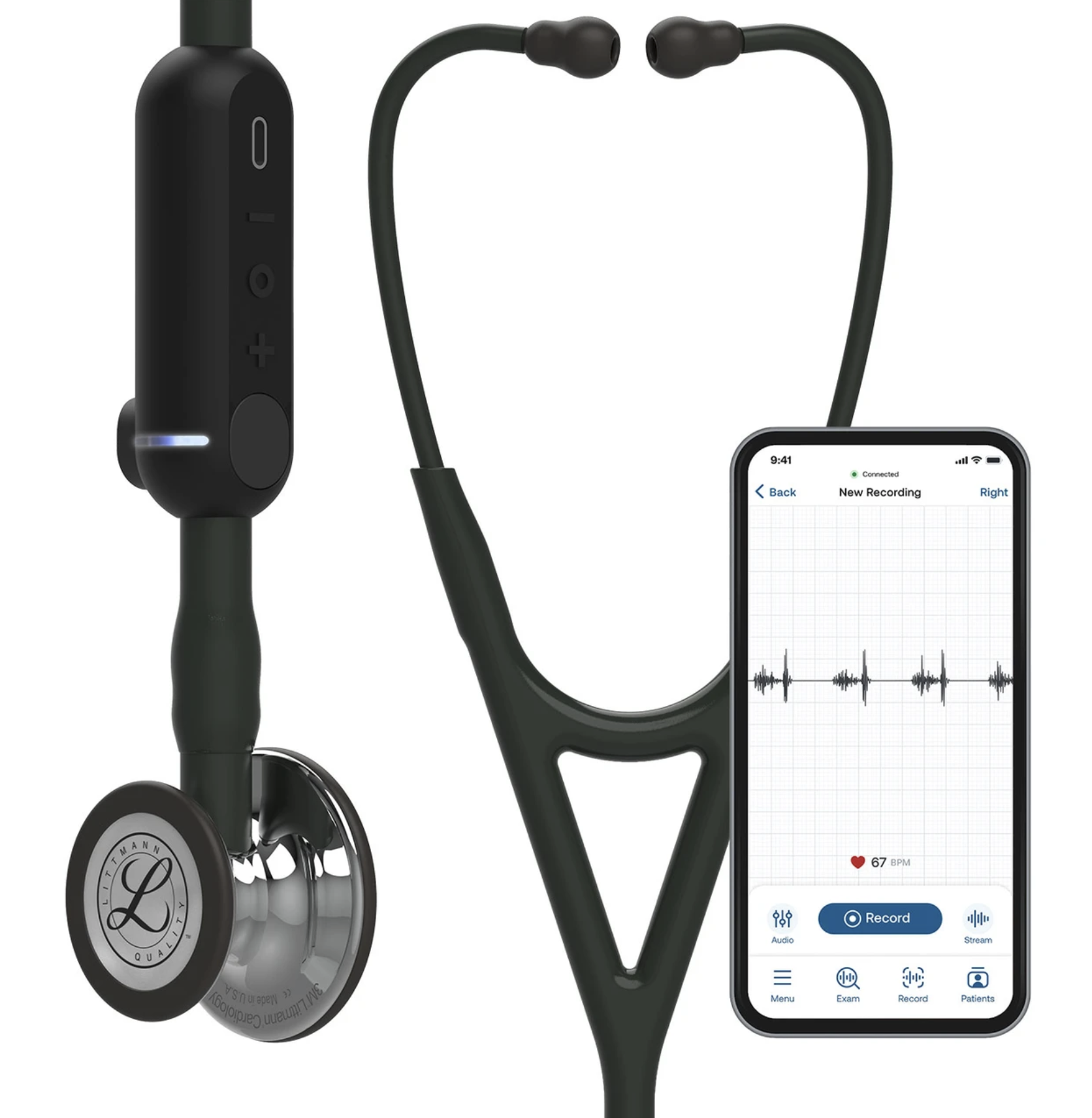
Littmann CORE Digital Stethoscope
The Littmann CORE Digital Stethoscope, Mirror 8890 combines Littmann acoustics with digital listening technology. It provides up to 40x amplification at peak frequency compared with analog mode and incorporates active noise cancellation to reduce distracting background sounds.
Practitioners can quickly switch between traditional analog and amplified listening modes. The stethoscope can also connect with Eko software to display real-time heart sound waveforms, giving users another way to evaluate what they are hearing.
These accessibility advantages can be especially useful for clinicians with hearing difficulties who benefit from greater volume, reduced ambient noise, or visual reinforcement during auscultation.
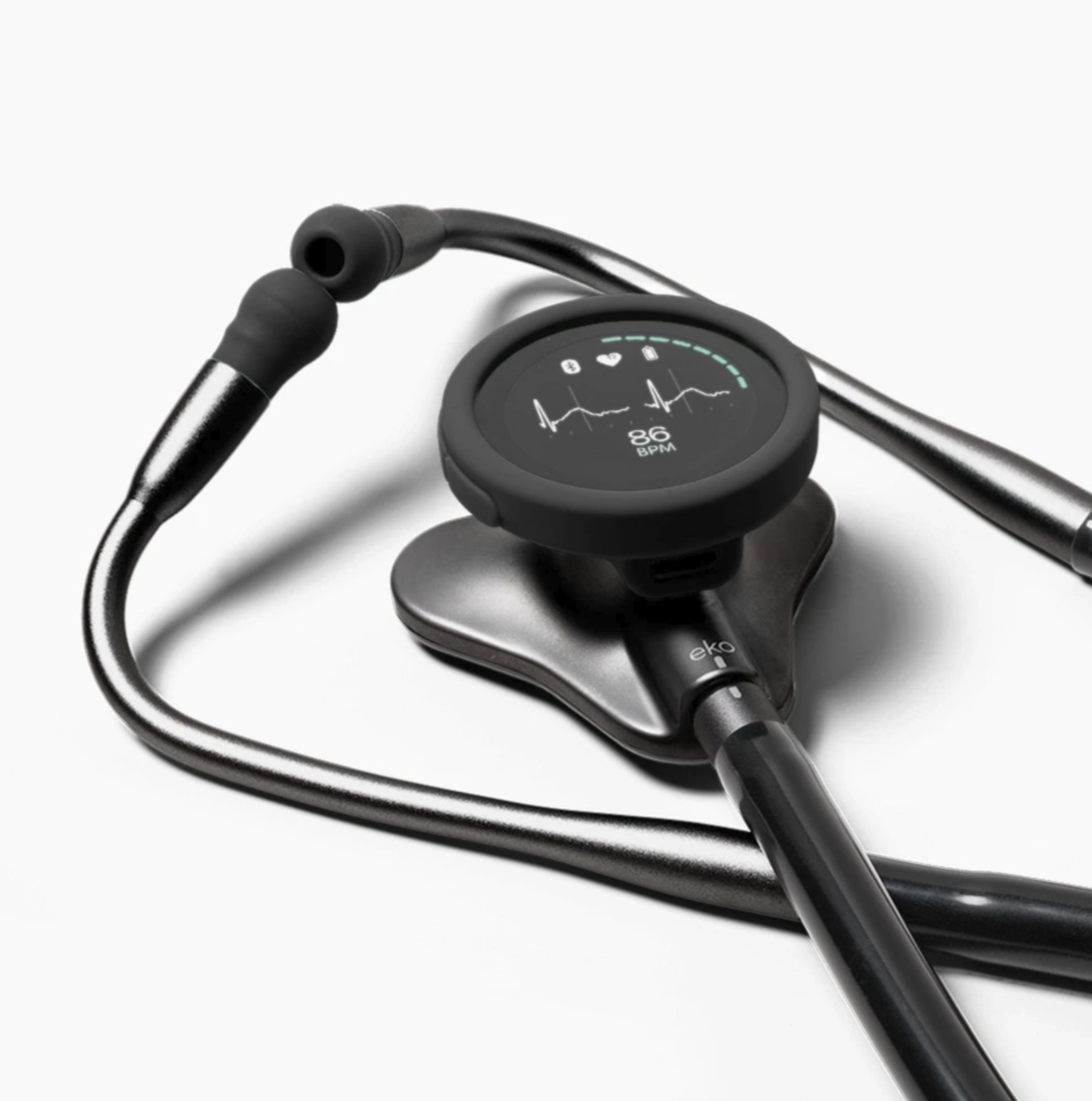
Eko CORE 500 Digital Stethoscope
For practitioners seeking an even more technology-focused option, the Eko CORE 500 combines digital auscultation with waveform visualization and 3-lead ECG capabilities. Its TrueSound™ technology provides active noise cancellation and up to 40x sound amplification, helping make difficult-to-hear body sounds clearer.
Because clinicians can pair enhanced audio with visual information, the CORE 500 may be particularly appealing when hearing alone is not the preferred way to interpret an examination. Practitioners can also personalize and protect the device with accessories such as the CORE 500 Stethoscope Cover in Black Nightfall.
Finding the Right Stethoscope for Your Hearing Needs
Hearing loss varies considerably from person to person, so there is no single stethoscope that will work best for every practitioner. Clinicians who use hearing aids or other assistive hearing devices should also consider how a particular stethoscope will integrate with their existing setup.
For practitioners who need greater volume and clarity, however, digital models such as the Littmann CORE Digital and Eko CORE 500 provide significant advantages over conventional acoustic stethoscopes. With amplification, noise cancellation, and visual listening tools, these advanced stethoscopes can help make auscultation clearer, more accessible, and better suited to individual hearing needs.